Featured Specimens
San Juan Raya ▼
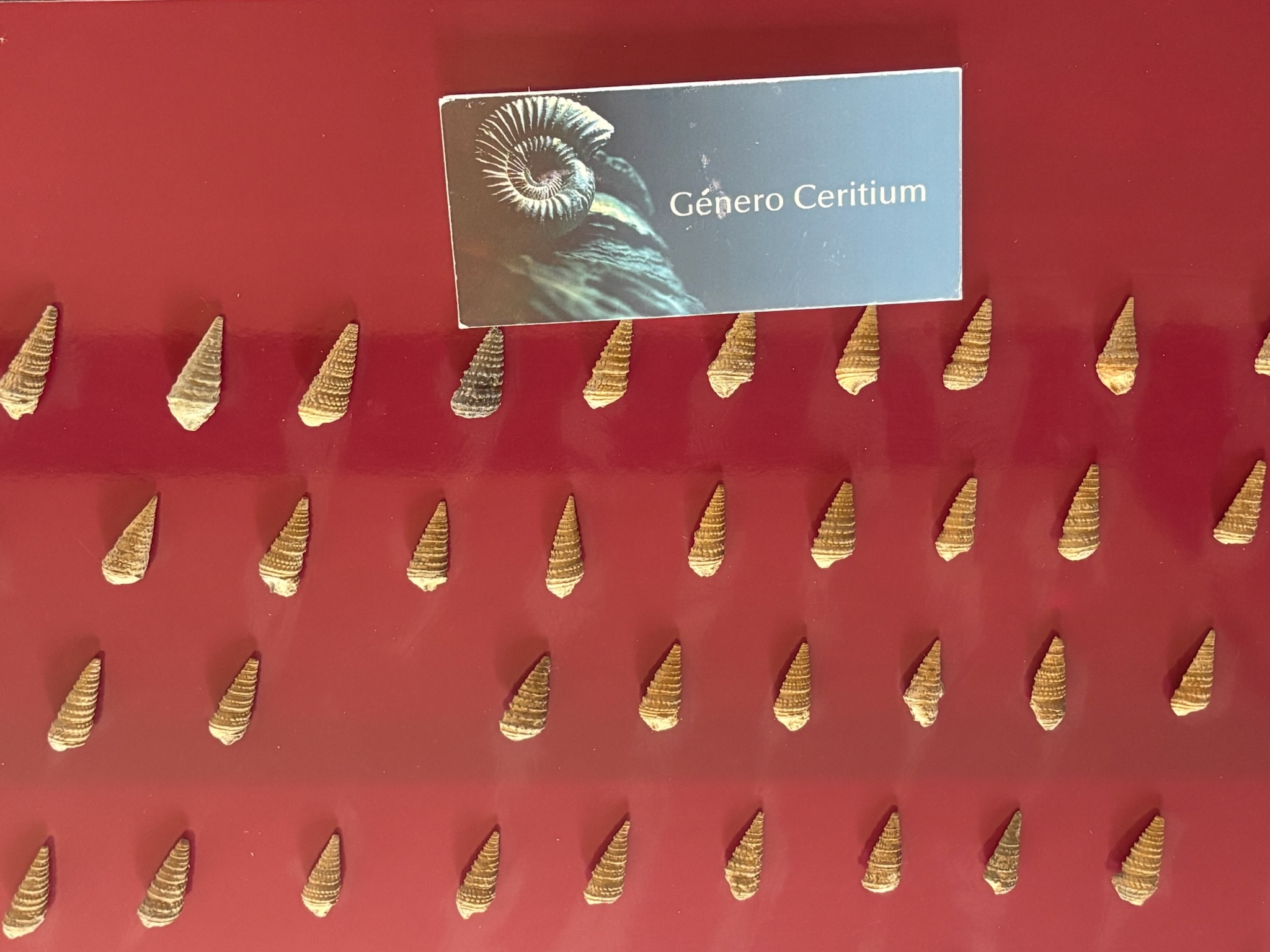
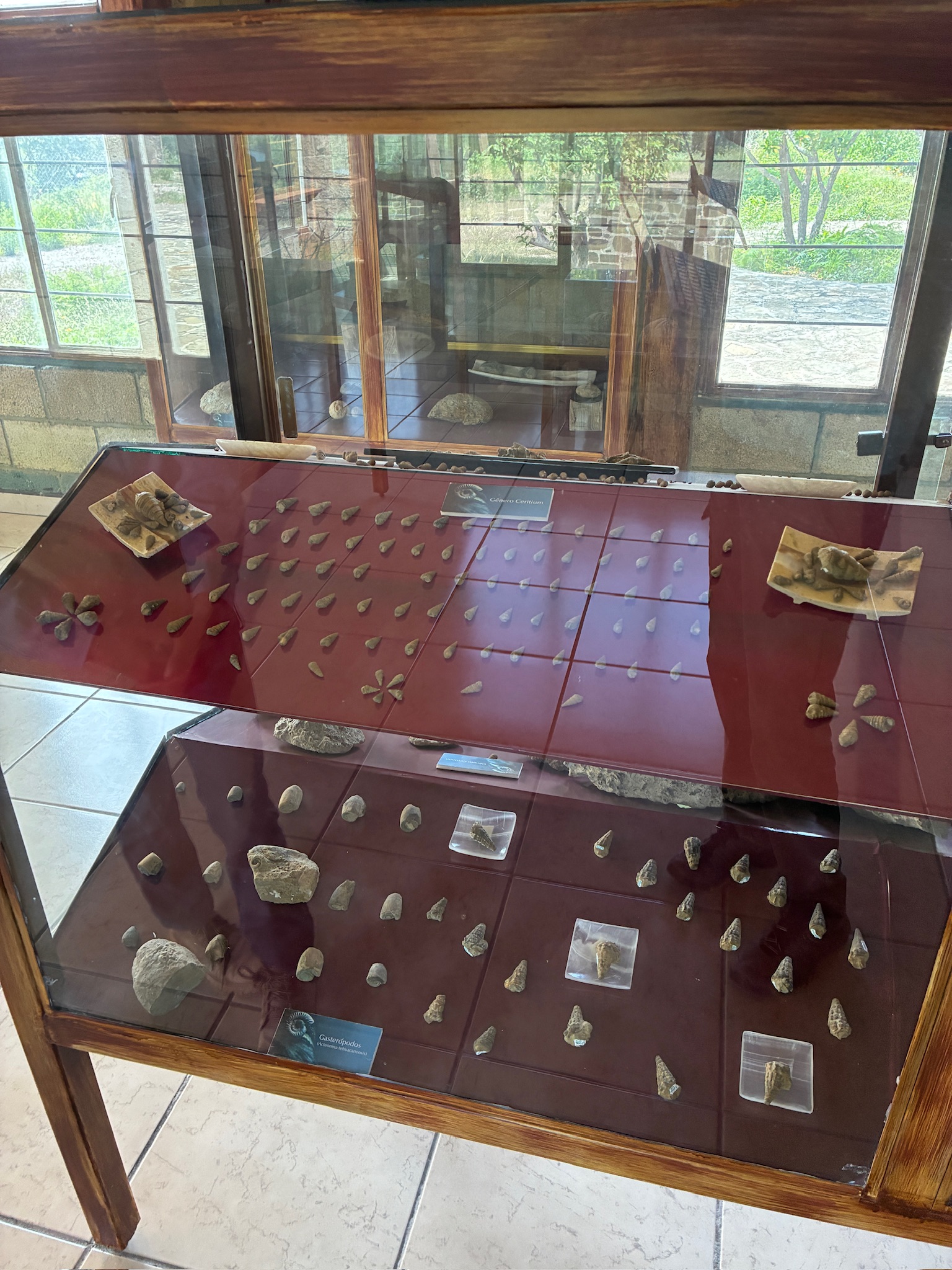
Cerithium
Cerithium is a genus of medium-sized marine gastropods, specifically sea snails. They were most likely herbivores that were eaten by larger cephalopods and other predators. These specimens were found within the many cliffs and slopes of San Juan Raya, within layers of rock that were once ocean floor millions of years ago.
San Juan Raya ▼
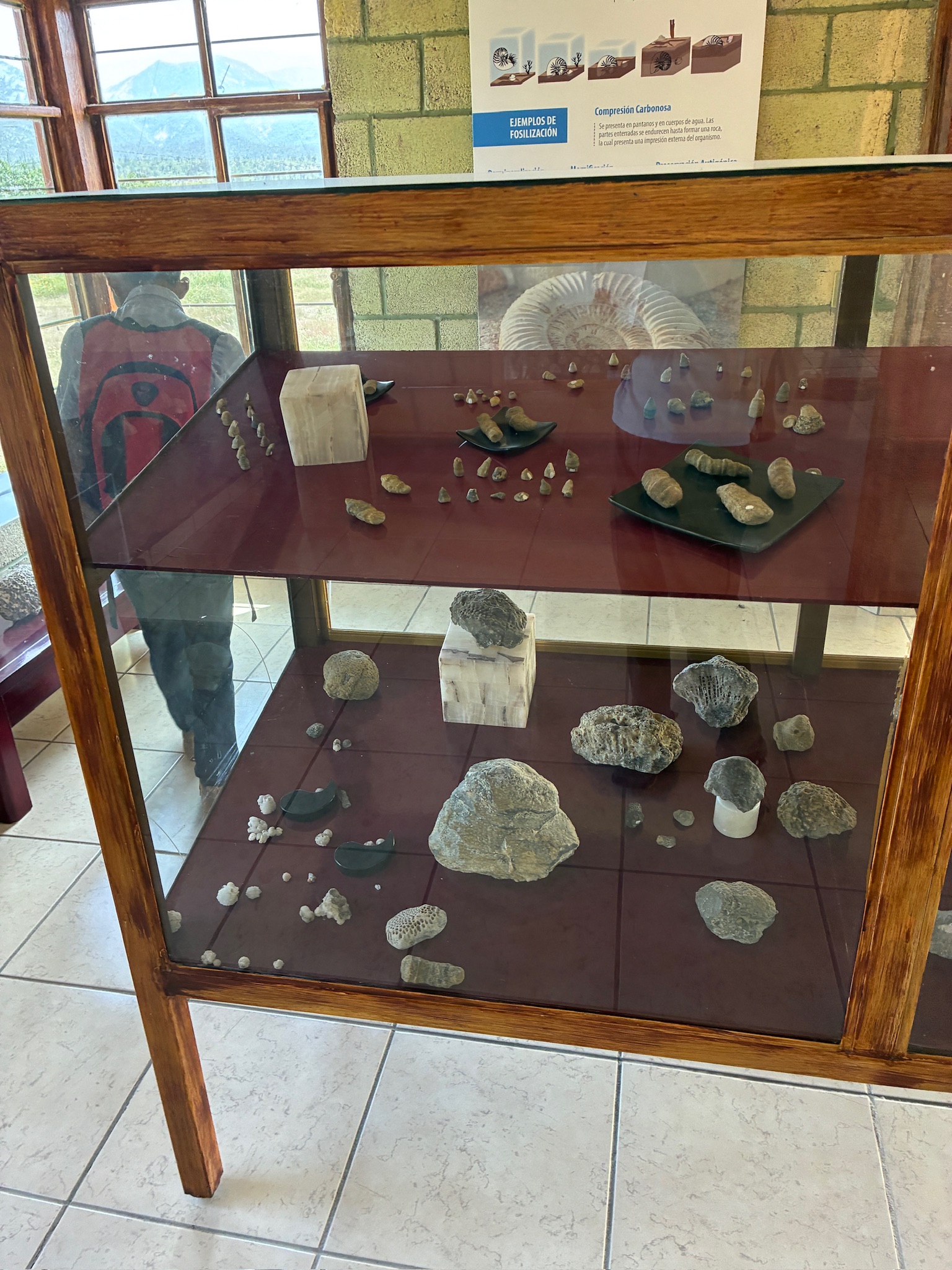
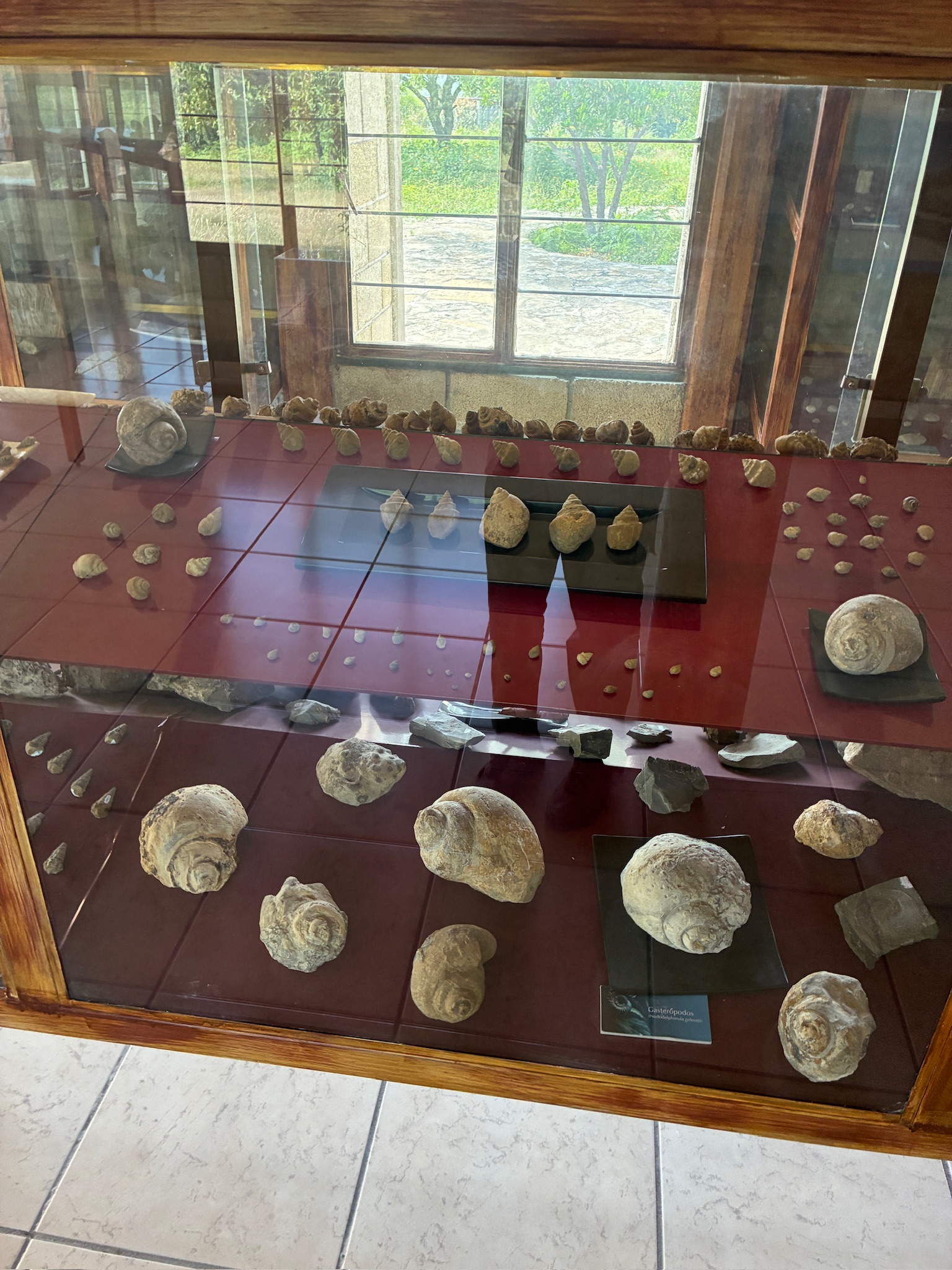
Gastropods
Gastropods are a phylogenetic class of Molluscs that includes snails, slugs, and their relatives. The specimens shown here are of the genus Acteona. Even though the species is labeled as "tehuacanansis", their is no official description for this dubious species.
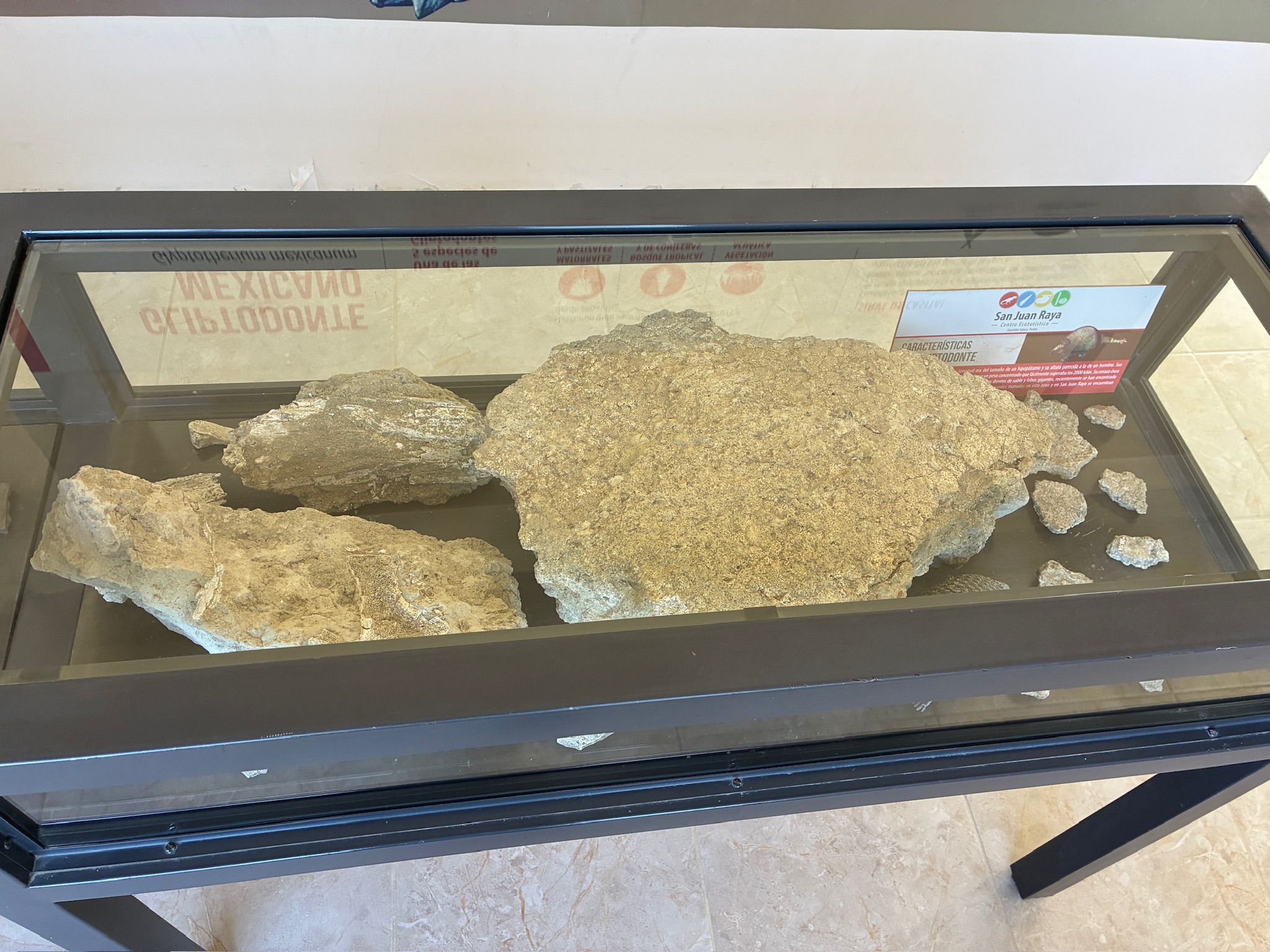
Glyptodont
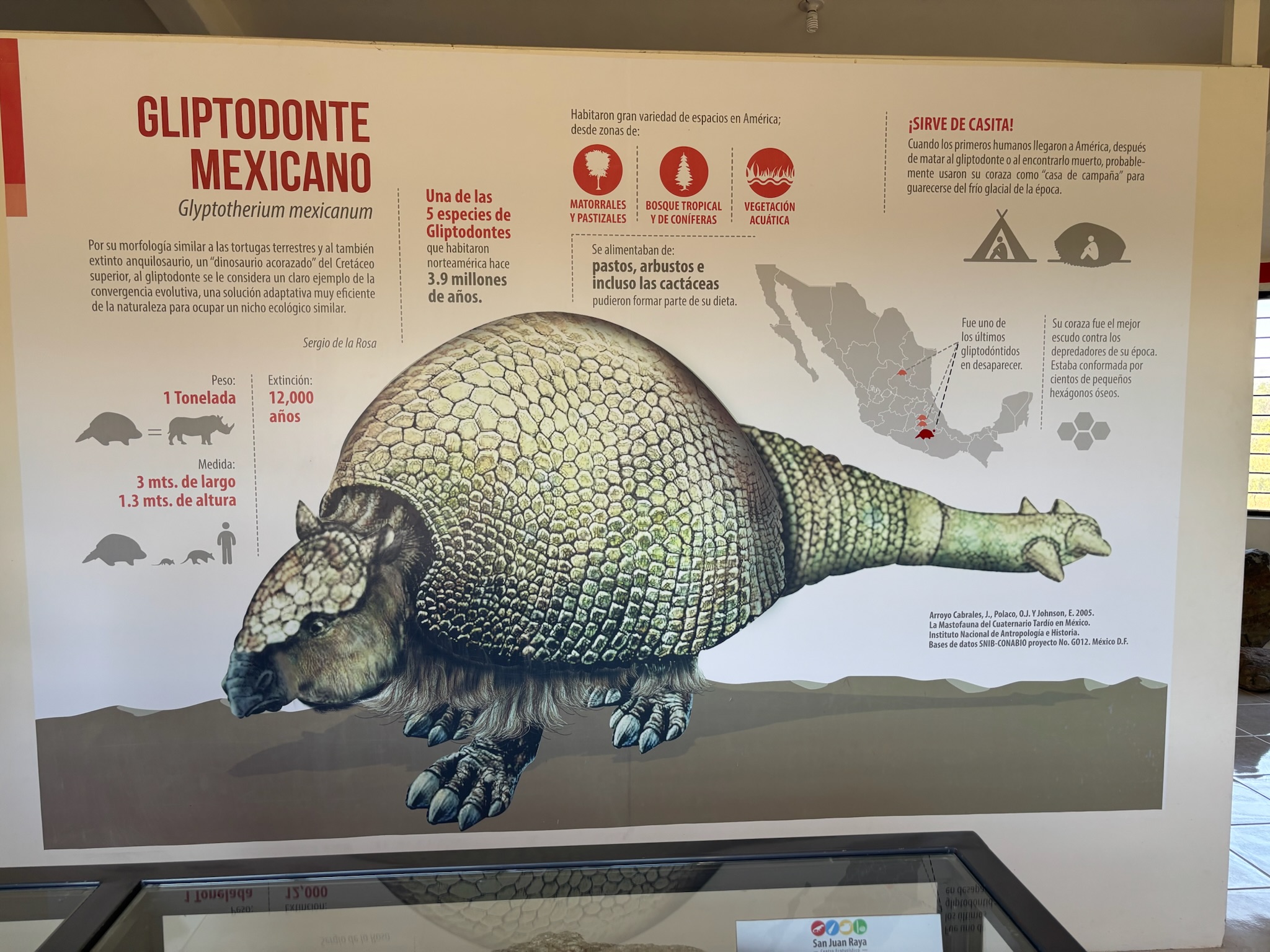
This illustration is right above the fossil shell of a mexican glyptodont, or Glyptotherium mexicanum. The specimen presented at the exhibit is a massive fossil shell, so large in fact, that early human tribes of Mexico used the shells of especially old and large individuals to make tents.
.jpeg)
San Juan Raya ▼
Trigonias (Ptertrigonia)
Pterotrigonia are an extinct genus of marine bivalves of the family Trigoniidae. Fossils of this genus are found in rock dating between the Paleozoic to the Cenozoic. These fossils were found in Early Cretaceous rocks, dating to 113-120 MYA. Trigonias are known for their strangely curved shells, which are covered in striations. It is unknown what these would be used for in life. Mating? Confusing Predators? We still don’t really know.